
Parent and Grandparent Sponsorship Canada: PGP Requirements and 2026 Update
For many Canadian families, the question is simple: “How can I bring my parents or grandparents to Canada permanently?” The answer in 2026 comes with an important limitation. Canada’s Parents and Grandparents Program (PGP) can provide permanent residence to eligible parents and grandparents, but IRCC paused new intake on July 15, 2026. Existing applications continue to be processed, while no new Interest to Sponsor forms or invitations are being accepted until further notice.
At Visaline, our approach is “With you on your immigration journey, from dream to reality” — but that journey begins with understanding what is actually available today, rather than relying on outdated information about previous PGP intakes.
Table of contents
- What is the Parents and Grandparents Program?
- Is parent sponsorship open in Canada in 2026?
- Who can sponsor parents or grandparents?
- Who can be sponsored?
- PGP income requirements
- The 20-year sponsorship undertaking
- How the application process works
- Fees and processing considerations
- PGP versus Super Visa
- Common mistakes and risks
- Frequently asked questions
What is the Parents and Grandparents Program?
The Parents and Grandparents Program (PGP) is a Family Class immigration program that allows eligible sponsors in Canada to sponsor qualifying parents and grandparents for Canadian permanent residence.
Under section 117 of the Immigration and Refugee Protection Regulations (IRPR), a sponsor’s mother or father and the mother or father of a sponsor’s parent may fall within the Family Class.
Unlike a visitor visa or Super Visa, successful PGP applicants become permanent residents of Canada. Permanent residence can provide substantially different long-term rights and obligations from temporary visitor status.
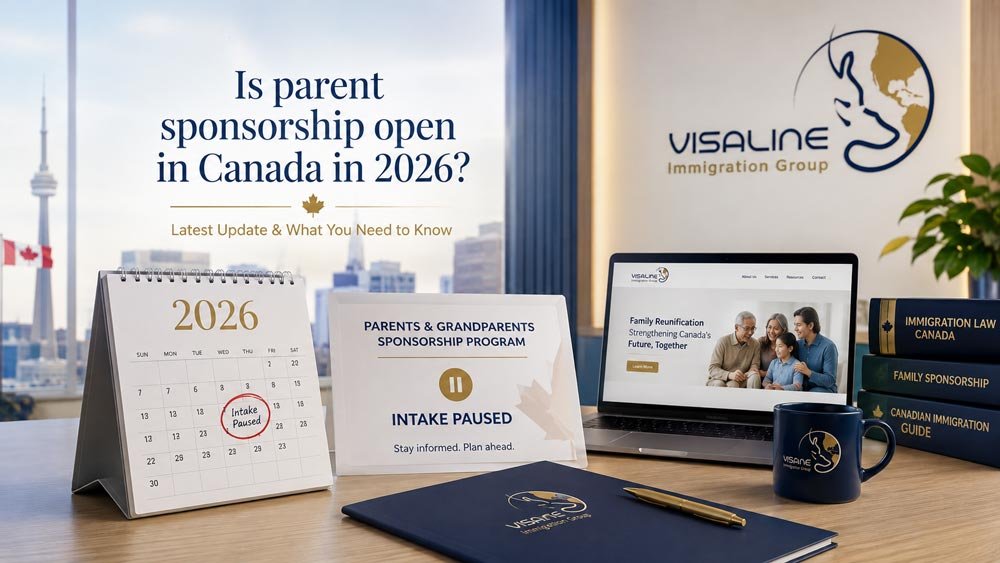
Is parent sponsorship open in Canada in 2026?
No new PGP intake is currently open.
IRCC formally paused the Parents and Grandparents Program on July 15, 2026. Until further notice, IRCC states that it will:
- not accept new Interest to Sponsor forms;
- not issue new invitations to potential sponsors;
- continue processing applications already submitted.
The final 2025 intake drew from people who had submitted an Interest to Sponsor form in 2020. Applicants could not simply submit a PGP application without first receiving an Invitation to Apply.
This distinction matters. A person who meets every financial and family requirement does not automatically have the ability to submit a new PGP application while intake remains paused.
Who can sponsor parents or grandparents?
For the federal PGP process outside Quebec, the sponsor generally must satisfy several core requirements.
IRCC currently states that a sponsor must:
- be at least 18 years old;
- live in Canada;
- be a Canadian citizen, permanent resident or a person registered in Canada under the Indian Act;
- have sufficient qualifying income;
- sign the required undertaking;
- satisfy the applicable requirements under the Immigration and Refugee Protection Act and Regulations; and
- for an intake requiring invitations, have received an Invitation to Apply.
A spouse or common-law partner may be able to act as a co-signer, allowing their qualifying income to be combined with the sponsor’s income. A co-signer also takes on legal responsibility under the undertaking.
Who may be unable to sponsor?
Depending on the circumstances, a person may be ineligible if they are, for example:
- incarcerated;
- in default of certain immigration debts;
- behind on certain court-ordered family support obligations;
- in default of a previous sponsorship undertaking;
- an undischarged bankrupt;
- receiving social assistance for a reason other than disability;
- subject to certain criminal restrictions; or
- subject to a removal order.
This is not an exhaustive list, and Quebec applies a separate sponsorship framework in addition to the federal process.
Who can be sponsored?
A qualifying sponsor may potentially sponsor their own biological or adopted:
- mother;
- father;
- grandmother; or
- grandfather.
Certain accompanying family members may also be included where they meet the relevant definitions.
For example, a parent’s spouse or partner may form part of the application, and a sibling may be included only if that sibling qualifies as a dependent child under Canadian immigration rules.
A key distinction is that you cannot use your own invitation to sponsor your spouse or partner’s parents. Your spouse or partner would generally need to qualify as the sponsor for their own parents, although you may potentially co-sign their application if the relevant requirements are met.
PGP income requirements
Financial eligibility is one of the most significant parts of parent and grandparent sponsorship.
Outside Quebec, IRCC generally requires the sponsor to demonstrate qualifying income for each of the three tax years immediately before the application. A spouse or common-law partner who qualifies as a co-signer may combine income with the sponsor.
IRCC generally relies on Canada Revenue Agency Notices of Assessment and uses the sponsor’s family size to determine the applicable threshold.

Why family size causes problems
“Family size” does not simply mean the number of parents being sponsored. Depending on the circumstances, it can include people for whom the sponsor or co-signer remains financially responsible.
This means a sponsor may calculate the wrong threshold if they overlook:
- themselves;
- their spouse or common-law partner;
- dependent children;
- people covered by an existing undertaking;
- the parents or grandparents being sponsored; or
- qualifying accompanying dependants.
Because the program is paused, there is no new open 2026 intake for which applicants should assume a particular three-year income table applies. The applicable income years and thresholds should be verified against the official IRCC instructions for the relevant intake before an application is prepared.
The 20-year sponsorship undertaking
Sponsoring a parent or grandparent creates a significant financial obligation.
Outside Quebec, the undertaking for a parent or grandparent generally lasts 20 years from the date the sponsored person becomes a permanent resident. Quebec has its own rules and currently uses a different undertaking period.
The sponsor promises to provide basic needs and may have to repay government social assistance received by the sponsored person during the undertaking period.
The obligation does not simply disappear because:
- the sponsor loses their job;
- the parent becomes a Canadian citizen;
- the family relationship changes;
- either party moves; or
- the sponsor later regrets the sponsorship.
Once permanent residence has been granted and the undertaking has started, it generally cannot simply be cancelled or shortened.
Practical example
Example: Sara sponsors her mother, who later becomes a permanent resident. Five years after landing, Sara experiences financial difficulties.
Sara’s job loss does not automatically terminate the sponsorship undertaking. The financial responsibility continues for the applicable undertaking period.
That long-term obligation is one reason financial eligibility should be treated as more than a formality.
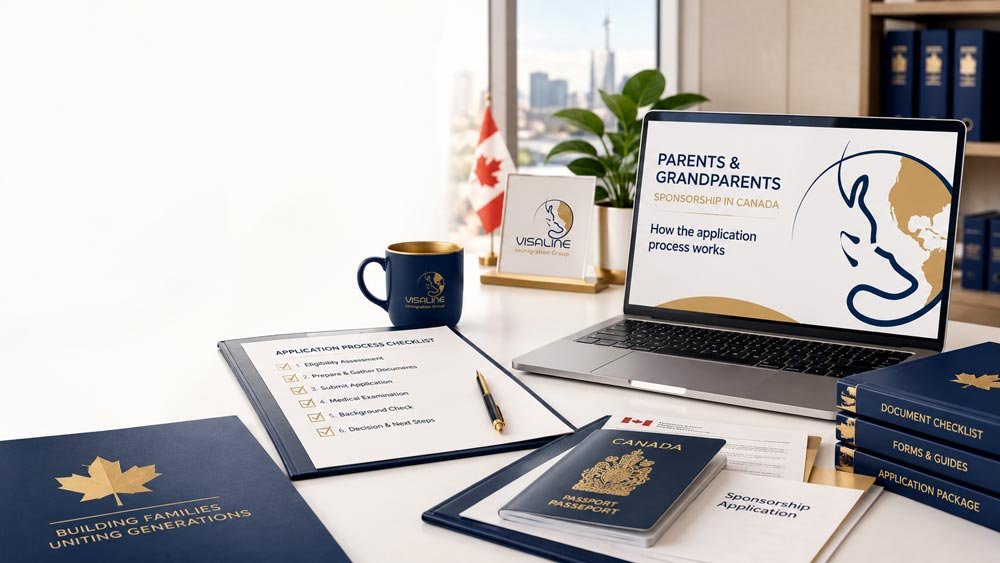
How the application process works
When a PGP intake is available, the process is not the same as simply completing a permanent residence application.
The broad process is:
- Meet the PGP eligibility rules.
- Submit an Interest to Sponsor form when IRCC opens an eligible intake.
- Receive an Invitation to Apply.
- Prepare the sponsorship application.
- Prepare the parent or grandparent’s permanent residence application.
- Submit both applications through the required online process.
- Respond to IRCC requests for documents, medical examinations, biometrics or other information where applicable.
- Wait for the sponsorship and permanent residence assessments to be completed.
For the previous intake, IRCC expressly instructed applicants not to submit a PGP application unless they had been invited.
Fees and processing considerations
As of the IRCC fee schedule modified in July 2026, sponsoring a parent or grandparent costs CAD $1,260 when the amount includes the sponsorship fee, processing fee and Right of Permanent Residence Fee. Other fees can apply for spouses, partners, dependent children, biometrics, medical examinations, police certificates or related requirements.
Government fees can change. They should always be checked again on IRCC immediately before payment.

How long does PGP processing take?
There is no responsible way to give every PGP applicant one fixed processing period. IRCC directs users to its current processing-time tool, and timelines may change based on inventory, application completeness, verifications and other case-specific factors.
For a page that will remain online, publishing a hard-coded processing time without a date and source creates a high risk of the information becoming outdated.
PGP versus Super Visa
For families unable to submit a new PGP application, the Super Visa may be worth examining. It is not permanent residence, but it can allow qualifying parents and grandparents to remain in Canada for extended periods.
| Feature | PGP Sponsorship | Super Visa |
|---|---|---|
| Immigration status | Permanent residence | Temporary visitor status |
| 2026 new intake | Paused | Available subject to eligibility |
| Sponsor/host income requirement | Yes | Yes |
| Medical requirements | Apply | Apply |
| Insurance requirement | Not the same as Super Visa | Private medical insurance required |
| Length of stay | Permanent residence | Up to 5 years per entry |
| Main purpose | Permanent family reunification | Extended family visits |
IRCC states that Super Visa holders may be authorized to stay for up to five years per entry, and they may potentially apply for extensions while in Canada. Applicants must also meet specific health-insurance and other visitor requirements.
A Super Visa should not be described as a permanent replacement for the PGP. The legal status and eligibility tests are different.
Common mistakes and risks
Many PGP problems begin before the permanent residence assessment itself.
Common risks include:
- assuming the program is currently accepting new applications;
- relying on income thresholds from an earlier intake;
- calculating family size incorrectly;
- failing to account for previous sponsorship obligations;
- misunderstanding a co-signer’s legal responsibility;
- submitting incomplete or inconsistent family information;
- failing to disclose relevant dependants;
- assuming financial responsibility ends if circumstances change; and
- confusing Super Visa eligibility with PGP eligibility.
A professional review may be particularly useful where household composition, prior sponsorships, marital changes, co-signing or income history make the calculation less straightforward.
Frequently asked questions
Is the Parents and Grandparents Program open in Canada in 2026?
No. IRCC paused new PGP intake on July 15, 2026. It is not currently accepting new Interest to Sponsor forms or issuing new invitations, although applications already in the system continue to be processed.
Can I sponsor my parents without receiving an invitation?
Not under an invitation-based PGP intake. For the previous intake, IRCC required an Invitation to Apply before a sponsorship application could be submitted. An application submitted without the required invitation would not enter normal processing.
How much income do I need to sponsor my parents?
The amount depends on family size and the applicable PGP intake. Outside Quebec, IRCC generally requires qualifying income for each of the three relevant tax years. Because no new intake is currently open, applicants should not assume that the income table from the previous intake will govern a future one.
Can my spouse help me meet the PGP income requirement?
Potentially, yes. An eligible spouse or common-law partner can co-sign the application and combine qualifying income with yours. The co-signer also becomes legally responsible for the undertaking obligations.
Is a Super Visa the same as parent sponsorship?
No. PGP sponsorship is a permanent residence pathway. A Super Visa is a temporary residence option that can allow qualifying parents and grandparents to stay in Canada for extended periods. It does not itself grant permanent residence.
How long am I financially responsible for a sponsored parent?
Generally 20 years outside Quebec. The undertaking starts when the sponsored parent or grandparent becomes a permanent resident. Quebec applies a different sponsorship framework and undertaking period.
Conclusion
Parent and grandparent sponsorship can provide permanent family reunification, but the program is not currently open to new intake. For families planning ahead, the most practical issues are therefore understanding future PGP eligibility, preserving accurate income records and considering whether a temporary option such as the Super Visa is appropriate in the meantime.
Where family size, co-signing, previous undertakings or income history are complicated, a case-specific assessment can help identify issues before they become part of an application.

Legal information notice
This page provides general information about Canadian immigration law and IRCC procedures. It is not legal advice and does not replace an assessment based on your complete immigration, financial and family circumstances. Immigration rules, fees, intake procedures and processing information may change.
Sources
- IRCC — Sponsor your parents and grandparents
- IRCC — PGP eligibility requirements
- IRCC — PGP income requirements
- IRCC — Sponsorship undertaking
- IRCC — Current application fee list
- Justice Laws Website — Immigration and Refugee Protection Regulations, ss. 117 and 132
- IRCC — Super Visa eligibility
Contact us today to review your case and book your immigration consultation. We also recommend following Visaline Immigration Institute on Instagram for real-time updates on IRCC news and immigration law changes. ☎️ Toronto WhatsApp: +1-647-860-0005
Published/updated: August 9, 2026 Author: Afifeh Hosseini, Visaline Team Member and Content Creator