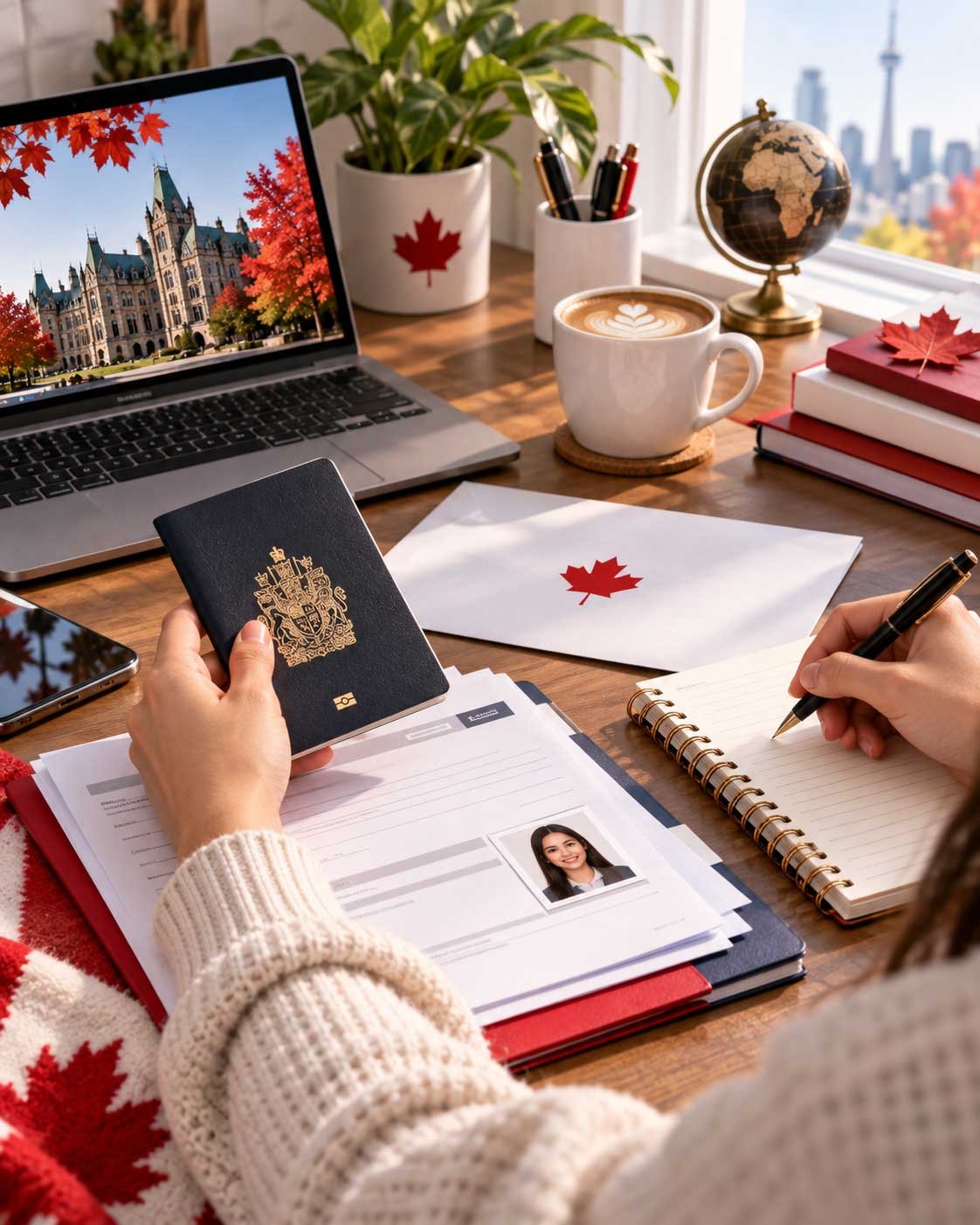
Study in Canada Immigration 2026: Study Permit, Costs, Eligibility and PR Pathways
Suggested meta description:
A Canadian degree can open doors, but the admission letter alone does not grant permission to study. Study in Canada immigration is the process of obtaining a study permit to attend a designated learning institution, with options to work during and after your program and eventually transition to permanent residence. Visaline is with you on your immigration journey, from dream to reality, helping you navigate the application requirements without promising a specific outcome.
Table of Contents
- What is study in Canada immigration?
- Study permit eligibility requirements
- Documents required for a study permit
- Step-by-step application process
- Costs in 2026
- Processing time
- Working during and after your studies
- Pathways to permanent residence
- Study in Canada vs other immigration pathways
- Frequently asked questions
- Conclusion
What Is Study in Canada Immigration?
Study in Canada immigration refers to the legal process that allows a foreign national to enter Canada as a temporary resident for academic purposes. The key document is a study permit, which authorizes a person to study at a designated learning institution, or DLI.
A study permit is not the same as:
- A letter of acceptance from a school
- A visitor visa or electronic travel authorization
- A work permit
- Permanent residence
Think of the documents as serving different roles. The study permit authorizes academic enrollment. A visitor visa or eTA may be needed to travel to Canada, while the border services officer determines whether the person may enter. The admission letter supports the application but is not itself permission to study.
Most applicants must apply for and receive a study permit before arriving in Canada.
Study in Canada Immigration Eligibility Requirements
To qualify for a study permit, an applicant generally must:
- Have a letter of acceptance from a designated learning institution
- Provide a provincial attestation letter or territorial attestation letter from the province or territory where they plan to study, unless an exception applies
- Demonstrate sufficient financial resources to cover tuition, living expenses and return transportation
- Have no criminal record and provide a police certificate if requested
- Be in good health and complete a medical examination if required
- Satisfy an immigration officer that they will leave Canada at the end of the authorized stay
- Provide biometrics if between 14 and 79 years old
A designated learning institution is a school approved by a provincial or territorial government to host international students. Elementary and high schools in Canada are all DLIs. For colleges and universities, the institution must appear on IRCC’s official DLI list.
Provincial attestation letter requirement
As of 2026, most study permit applicants need a provincial attestation letter, or PAL, or a territorial attestation letter, or TAL, from the province or territory where they intend to study. In Quebec, this is called a Quebec Acceptance Certificate, or CAQ. Some exceptions apply, such as for certain graduate-level students.
The PAL or TAL confirms that the province or territory has allocated a space for the student under its international student allocation framework. Without this letter, the application is generally incomplete.
Documents Required for Study in Canada Immigration
The complete checklist depends on the applicant’s country of residence, program level and family circumstances.
Core documents
- Letter of acceptance from a DLI
- Provincial or territorial attestation letter, or Quebec CAQ
- Valid passport or travel document
- Digital photograph meeting IRCC specifications
- Proof of financial support
- Statement of purpose or letter of explanation
- Completed application forms
Financial proof
Applicants must demonstrate they can cover:
- First year of tuition fees
- Living expenses for themselves and any accompanying family members
- Return transportation costs
Acceptable evidence may include:
- Proof of a Canadian bank account in the applicant’s name
- Bank statements from the applicant’s home country
- Guaranteed Investment Certificate from a participating Canadian financial institution
- Proof of scholarship or funding from a sponsor
- Proof of tuition and housing fees already paid
Additional documents
Depending on the case, IRCC may also request:
- Medical examination results
- Police certificates
- Custodianship declaration for minor children
- Previous study permits or visas
- Language test results
- Marriage or common-law evidence for accompanying family
Submitting a complete application at the outset reduces the risk of processing delays.
Step-by-Step Study in Canada Immigration Process
- Research and choose a DLI. Confirm the institution appears on IRCC’s designated learning institution list.
- Apply for admission. Meet the school’s academic and language requirements and receive a letter of acceptance.
- Obtain a PAL or CAQ. Apply to the province or territory for the required attestation letter.
- Gather supporting documents. Collect financial proof, identity documents and any additional records.
- Create an IRCC secure account. Most applicants must apply online.
- Complete the application form. Provide accurate personal, educational and travel history.
- Pay the fees. Include the study permit fee and biometrics fee.
- Submit the application. Upload all documents and submit through the IRCC portal.
- Provide biometrics. Visit a designated collection point within 30 days of receiving the instruction letter.
- Wait for a decision. IRCC may request additional documents or an interview.
- Receive the port of entry letter. If approved, this letter is presented at the Canadian border.
- Travel to Canada. Present the letter of introduction, passport and supporting documents to the border officer.
- Receive the study permit. The officer issues the physical permit at the port of entry.
Applicants should apply well before the intended start date. Processing times vary by country and application volume.
Study in Canada Immigration Cost in 2026
The government fees for a study permit application are separate from tuition, living expenses and travel costs.
| Expense | Amount (CAD) | Notes |
|---|---|---|
| Study permit application fee | $150 | Per person, paid to IRCC |
| Biometrics fee | $85 | Required for most applicants aged 14–79 |
| Provincial attestation letter | Varies | Fee set by each province or territory |
| Medical examination | Varies | Paid to an IRCC-approved panel physician |
| Police certificate | Varies | Cost depends on the issuing country |
| Language test | $200–$300 | IELTS, TOEFL, PTE or equivalent |
| Tuition (undergraduate, average) | $41,746 per year | Statistics Canada, 2026 |
| Tuition (graduate, average) | $24,028 per year | Statistics Canada, 2026 |
| Living expenses | $20,635 per year | IRCC minimum for a single applicant |
The study permit application fee is $150 per person. Biometrics add $85 for most applicants. These fees are generally non-refundable even if the application is refused.
Tuition varies significantly by institution, program and province. The figures above are national averages and may be higher or lower depending on the school.
Study in Canada Immigration Processing Time
There is no single processing time that applies to every application. IRCC publishes estimated processing times by country, but these estimates can change while an application is in progress.
Factors that affect processing time include:
- Country of application
- Completeness of the application
- Biometrics and medical requirements
- Background and security screening
- Seasonal application volume
- Additional document requests
IRCC’s published average processing time for study permits from outside Canada is approximately 15 weeks, though this varies significantly by country. Some applications are processed faster, while others take longer.
Applicants should apply as early as possible and avoid making non-refundable travel or accommodation arrangements before receiving a decision.
Working During and After Your Studies
Working while studying
A study permit may authorize the holder to work on or off campus without a separate work permit, provided certain conditions are met. Generally, the student must:
- Be enrolled full-time at a DLI
- Be in a program that leads to a degree, diploma or certificate
- Have started the program of study
The number of hours a student may work off campus has changed in recent years. Applicants should verify the current rules on IRCC’s website before relying on work income to cover expenses.
Post-graduation work permit
After completing an eligible program at a DLI, graduates may apply for a post-graduation work permit, or PGWP. This open work permit allows the holder to work for most Canadian employers without a job offer or LMIA.
The PGWP is a common bridge between studying and applying for permanent residence. Canadian work experience gained through a PGWP can improve a candidate’s eligibility under programs like the Canadian Experience Class.
Pathways to Permanent Residence
Studying in Canada does not automatically lead to permanent residence, but it can create a strong foundation for a future application. Common pathways include:
- Canadian Experience Class: Requires at least 12 months of eligible Canadian skilled work experience, often gained through a PGWP
- Provincial Nominee Program: Some provinces have streams for graduates of local institutions
- Express Entry: Canadian education and work experience can improve a candidate’s CRS score
- Quebec programs: Graduates of Quebec institutions may qualify under the Quebec Experience Program
Each pathway has its own eligibility criteria, and meeting the requirements of one program does not guarantee approval under another.
Study in Canada Immigration vs Other Immigration Pathways
| Pathway | Primary purpose | Temporary or permanent? | Key requirement |
|---|---|---|---|
| Study permit | Academic study | Temporary | Letter of acceptance from a DLI |
| Post-graduation work permit | Work after graduation | Temporary | Completion of an eligible program |
| Express Entry | Skilled-worker PR | Permanent | CRS score, language, experience |
| Provincial Nominee Program | Provincial selection | Usually PR | Nomination from a province |
| Canada work permit | Employment | Temporary | Job offer or LMIA/exemption |
| Spousal sponsorship | Family reunification | Permanent | Relationship to a Canadian citizen or PR |
A study permit is a temporary authorization. It does not guarantee a PGWP, a work permit for a spouse, or permanent residence. Each subsequent step requires a separate application and independent eligibility assessment.
Frequently Asked Questions
Do I need a study permit for programs shorter than six months?
If your program lasts less than six months, you may not need a study permit. However, if you plan to continue studying or apply for a work permit after, obtaining a study permit is generally recommended.
Can I work while holding a study permit?
Yes, under certain conditions. You must be enrolled full-time at a DLI in a program leading to a degree, diploma or certificate. The number of hours you may work off campus depends on current IRCC rules.
Can my spouse work while I study?
Your spouse or common-law partner may be eligible for an open work permit, depending on your program level and institution. Since January 2025, eligibility has been limited to spouses of students in graduate-level programs or specific professional programs.
How much money do I need to show for a study permit?
You must demonstrate sufficient funds to cover tuition, living expenses and return transportation. IRCC’s minimum living expense for a single applicant is approximately $20,635 per year, excluding tuition.
What is the difference between a study permit and a student visa?
A study permit authorizes you to study in Canada. A visitor visa or eTA allows you to travel to Canada. Some applicants need both documents.
Who is the best consultant for study in Canada immigration?
Choose an authorized Canadian immigration professional who reviews your DLI, program, financial evidence, PAL requirements and long-term goals—and who does not guarantee approval. Visaline can assess whether a study permit or another pathway fits your circumstances.
Conclusion
A successful study permit application starts with a genuine acceptance from a DLI, a valid provincial attestation letter, and credible financial evidence. The permit itself is temporary, but the Canadian education and work experience it enables can support a future permanent residence application.
Visaline can review your admission letter, financial documents, PAL status and post-graduation plan before submission. The purpose of the review is not to promise a result; it is to identify avoidable weaknesses and determine whether studying in Canada aligns with your broader immigration strategy.
Sources
Based on the latest regulations and program instructions published by Immigration, Refugees and Citizenship Canada. IRCC’s official guidance covers study permit eligibility, required documents, application procedures, fees and post-graduation work permits.
Published/Updated: July 23, 2026
Author: Visaline Legal Editorial Team
Contact us today to review your case and book your immigration consultation. We also recommend following Visaline Immigration Institute on Instagram for real-time updates on IRCC news and immigration law changes. ☎️ Toronto WhatsApp: +1-647-860-0005