
PR Card Renewal Canada: Requirements, Documents, Process and Travel
A permanent resident preparing for an international trip may discover that the PR card expires in a few months—or has already expired. You can renew a PR card from inside Canada if it will expire in less than nine months or has already expired, but the application can involve more than replacing a piece of plastic: IRCC may also assess whether you continue to meet the permanent resident residency obligation. IRCC’s current PR card instructions direct applicants to use the Permanent Residence Portal and the digital IMM 5444 application.
For Visaline, “With you on your immigration journey, from dream to reality” also means helping permanent residents distinguish a routine card renewal from a situation where travel history, time abroad or evidence of residence may need closer review.
Table of contents
- What PR card renewal means
- When you should renew your PR card
- Residency obligation for PR card renewal
- Documents for a PR card renewal
- How to renew a PR card in Canada
- PR card renewal fee and processing
- Travelling with an expired or expiring PR card
- Common PR card renewal mistakes
- Frequently asked questions
What PR card renewal means
A PR card is evidence of permanent resident status and is particularly important when a permanent resident returns to Canada by a commercial carrier. The expiry of the card itself does not automatically terminate permanent resident status. IRCC confirms that a person can remain a permanent resident even after the physical PR card expires. See IRCC’s explanation of permanent resident status.
This distinction matters because two separate questions are often confused:
| Question | What it means |
|---|---|
| Is the PR card valid? | Whether the physical status document can be used for travel and proof purposes |
| Is the person still a permanent resident? | Whether PR status continues under Canadian immigration law |
A routine renewal may be straightforward when the applicant has clearly spent enough time in Canada. A file can become more legally significant when the applicant has extensive absences, uncertain travel records or periods abroad that may need to be counted under one of the statutory exceptions.
When you should renew your PR card
IRCC currently says an existing PR card may be renewed when it expires in less than nine months or has already expired. A PR card is usually valid for five years, although some cards may be valid for one year. IRCC PR card renewal instructions.
You may also need a new card if the existing one is:
- lost or stolen;
- damaged, bent, warped or unreadable;
- issued with information that needs to be updated; or
- no longer available when you need evidence of PR status.
If your card is still valid for more than nine months, a normal renewal application may be premature unless another reason for replacement applies.
PR card, passport and calendar showing when a permanent resident should renew a PR card in Canada
Residency obligation for PR card renewal
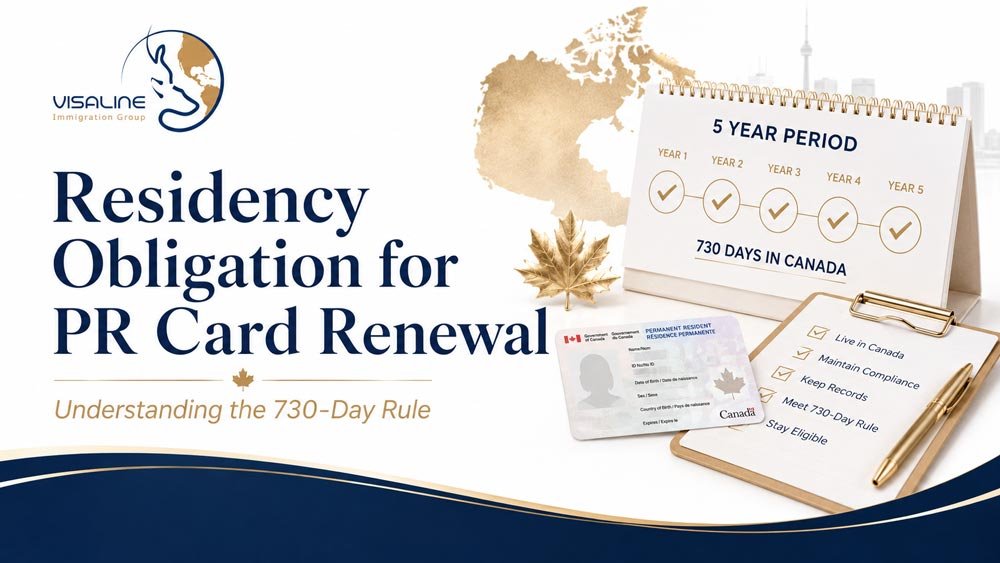
The central legal rule is found in section 28 of the Immigration and Refugee Protection Act (IRPA). A permanent resident must comply with the residency obligation for every five-year period. In general, a PR complies if they can count at least 730 qualifying days in the relevant five-year period. IRPA, section 28.
Qualifying days can include days when the person is:
- physically present in Canada;
- outside Canada accompanying a Canadian citizen spouse or common-law partner, or as a child accompanying a Canadian citizen parent;
- outside Canada working full-time for a qualifying Canadian business or the federal or a provincial public administration; or
- outside Canada accompanying a permanent resident spouse, common-law partner or parent who is working abroad in one of the qualifying forms of employment.
If you have been a permanent resident for less than five years, the legal test is not simply whether you already have 730 days. The Act provides that it is sufficient to show you will be able to meet the 730-day obligation by the end of your first five-year period as a PR. IRPA, section 28(2)(b).
Practical example
Assume a person became a permanent resident three years ago and has spent 500 days in Canada. Looking only at the number 500 could be misleading. The correct question is whether the person can still accumulate enough qualifying days before the fifth anniversary of becoming a permanent resident. The calculation should be based on exact dates and any potentially creditable time abroad.
If your travel history is close to the threshold, a case-specific review before filing can help identify calculation errors and determine what evidence is available to support any qualifying period outside Canada.
Documents for a PR card renewal
IRCC requires applicants to follow the Document Checklist (IMM 5644) and the current PR card instructions. The exact evidence depends on the applicant’s circumstances. IRCC Document Checklist IMM 5644.
Common parts of a PR card renewal file may include:
- the digital Application for a Permanent Resident Card (IMM 5444);
- the IMM 5644 document checklist;
- identity and travel-document information;
- a PR-card photo meeting IRCC specifications;
- proof relevant to residence and travel history;
- documents supporting any time abroad claimed toward the residency obligation; and
- additional forms if a representative is used or if personal information has changed.
IRCC’s current guide also requires applicants to provide evidence showing compliance with the residency obligation where applicable. Guide 5445.
The strength of the application is not measured by the number of documents submitted. Evidence should address the actual facts that IRCC needs to verify.
How to renew a PR card in Canada
For most applicants, the current process is online through the Permanent Residence Portal.
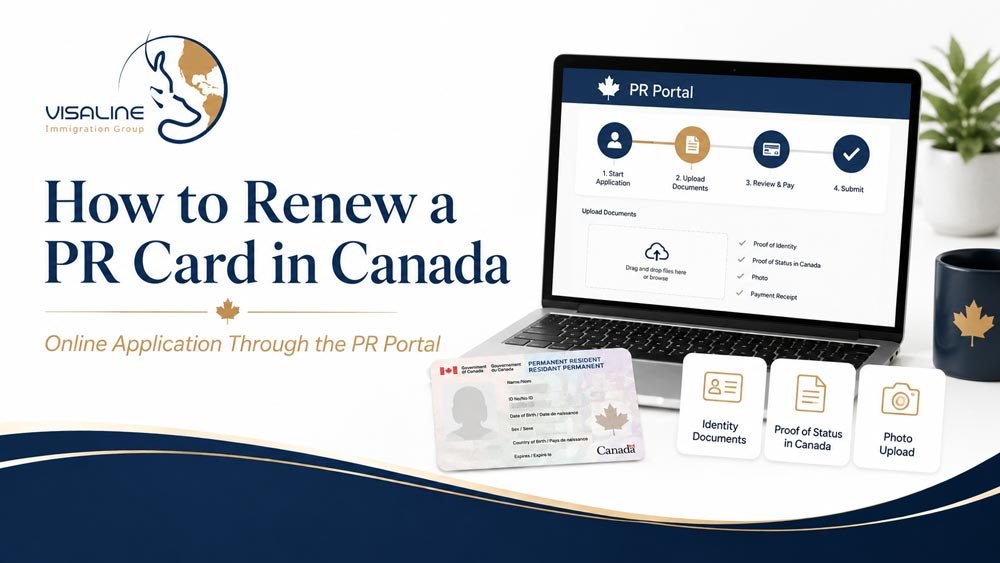
- Sign in to or create access to the Permanent Residence Portal.
- Complete the digital IMM 5444 PR card application.
- Complete the required document checklist and any additional forms that apply.
- Upload the required supporting documents and photograph.
- Pay the government fee online.
- Upload the payment receipt to the portal.
- Review the information carefully and submit the application.
- Monitor the application for updates or additional-document requests.
IRCC specifically warns applicants to answer all questions, sign electronically where required, include the fee receipt and upload the supporting documents before submission. IRCC PR card application process.
PR card renewal fee and processing
The current government fee to apply for, renew or replace a PR card is CAN$50 per person. IRCC Help Centre: PR card cost.
Processing time is not a fixed legal deadline. IRCC directs applicants to its current processing-time information because the actual time can change. If timing matters, check the official processing-time tool close to the date you submit.
Urgent PR card processing
Urgent processing exists only in certain circumstances. IRCC currently states that the minimum urgent processing time is three weeks and that qualifying for urgent treatment does not guarantee the card will be issued before a planned trip. IRCC urgent PR card information.
Do not purchase non-refundable travel solely on the assumption that an urgent request will be accepted or completed by a particular date.
Travelling with an expired or expiring PR card
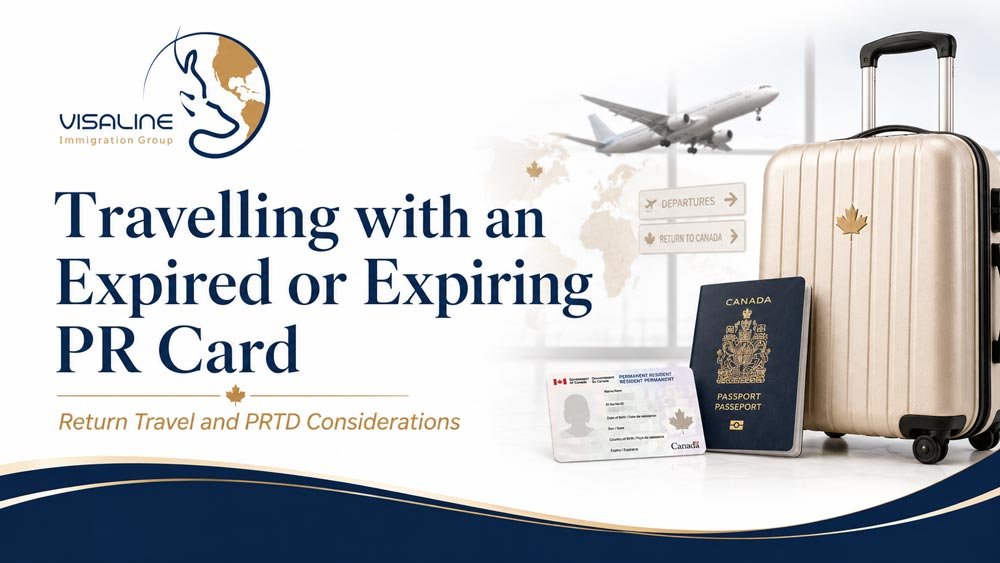
A permanent resident generally needs a valid PR card together with a passport or travel document to board a commercial carrier back to Canada. Commercial carriers include airplanes, buses, trains and boats. IRCC travel guidance for permanent residents.
If you are outside Canada without a valid PR card, you cannot renew the PR card from abroad. For commercial travel back to Canada, the usual document to consider is a Permanent Resident Travel Document (PRTD).
This is why travel planning should happen before departure. The question is not only “Will my card be valid on the day I leave Canada?” but also “Will I have acceptable documentation to board my return trip?”
Common PR card renewal mistakes
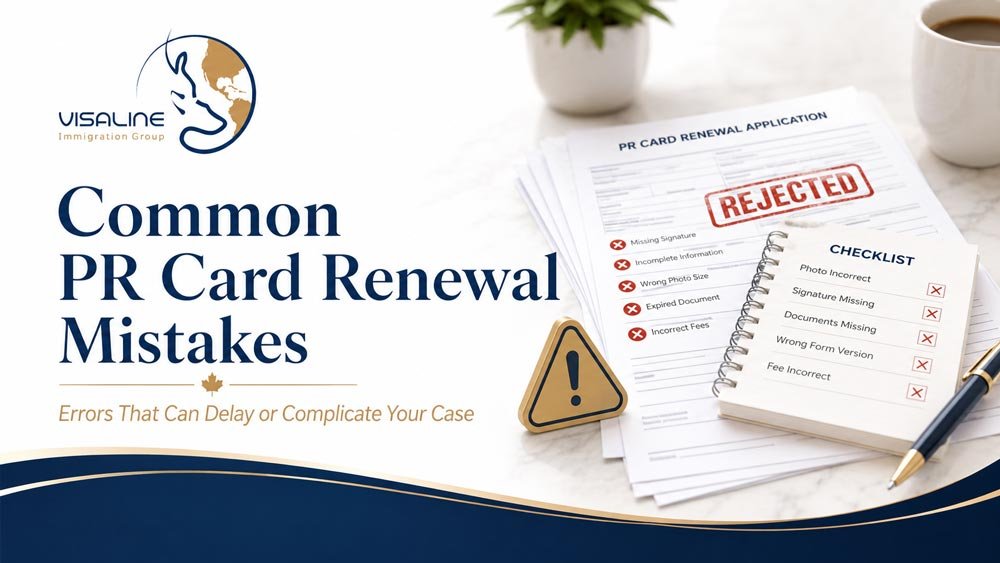
Problems often arise from factual or timing errors rather than from the form itself. Common issues include:
- assuming an expired PR card means PR status has already been lost;
- confusing the card’s expiry date with the five-year residency-obligation period;
- estimating travel dates from memory instead of reconstructing them carefully;
- assuming every day spent with a family member abroad automatically counts;
- submitting weak evidence for claimed qualifying employment outside Canada;
- leaving Canada while the renewal is pending without planning how to return;
- relying on a future urgent-processing request as the travel strategy; and
- using outdated forms, photo specifications or fee information.
A professional review may be particularly useful where the applicant is close to the 730-day threshold, has a complex work-abroad history, spent years outside Canada with family, or is considering travel while the card is expired.
PR card renewal application checklist showing common document and application mistakes
Frequently asked questions
Can I stay in Canada if my PR card has expired?
Yes. Expiry of the physical PR card does not by itself cancel permanent resident status. Your status and your travel document are separate issues. You must still comply with the PR residency obligation, and an expired card can create practical problems if you need to return to Canada by a commercial carrier.
Can I renew my PR card from outside Canada?
No, a PR card renewal is generally made from inside Canada. If you are abroad without a valid PR card and need to return on a commercial carrier, you may need to apply for a Permanent Resident Travel Document instead. The PRTD process also involves an assessment of whether you continue to meet the requirements of permanent resident status.
Can I travel while my PR card renewal is being processed?
You can leave Canada, but the pending renewal does not itself give you a document for commercial return travel. If your old PR card will not be valid when you return, you may need a PRTD from outside Canada. Travel should therefore be planned around your documentation, not simply around the fact that a renewal application is pending.
What if I have fewer than 730 days in Canada?
The answer depends on how long you have been a permanent resident and whether any time abroad legally counts. A PR of less than five years may still comply if they can meet the obligation by the end of their first five-year period. For PRs of five years or more, the relevant calculation generally looks back at the immediately preceding five years.
Do I need a valid PR card to apply for Canadian citizenship?
Not necessarily. IRCC states that an eligible permanent resident may apply for citizenship with a valid or expired PR card. Citizenship eligibility is based on PR status and the citizenship requirements, not simply the expiry date printed on the card.

Conclusion
PR card renewal Canada applications are often routine, but the decisive issue is not only whether the photograph and form are correct. Applicants should confirm their travel history, understand the 730-day residency obligation and plan any international travel before filing or leaving Canada.
Where the residency calculation is close, time abroad may or may not qualify, or an applicant is already outside Canada, the correct strategy depends on the complete record. A case-specific review can help separate a simple renewal from a status-related issue before an avoidable problem develops.
Legal information notice
This page provides general information about Canadian permanent resident cards and residency requirements. It is not legal advice and does not replace an assessment of your immigration history, travel record, family circumstances or supporting evidence.
Sources
- IRCC — Get, renew or replace a permanent resident card
- IRCC — Guide 5445: Applying for a permanent resident card
- IRCC — Document Checklist IMM 5644
- Justice Laws — Immigration and Refugee Protection Act, section 28
- IRCC — Travelling outside Canada as a permanent resident
- IRCC — Urgent PR card or PRTD processing
Published/updated: August 12, 2026 Author: Afifeh Hosseini, Visaline Team Member and Content Creator
Contact us today to review your case and book your immigration consultation. We also recommend following Visaline Immigration Institute on Instagram for real-time updates on IRCC news and immigration law changes. ☎️ Toronto WhatsApp: +1-647-860-0005