Healthcare System in Canada: A Complete Guide for Newcomers
One of the most common misconceptions about moving to Canada is that every medical service becomes immediately and completely free after arrival. Canada has a publicly funded healthcare system, but eligibility and coverage are administered by provinces and territories, and services such as prescription medication, dental care and vision care are not universally covered in the same way as medically necessary hospital and physician services.
Newcomers therefore need to understand not only whether Canada has universal healthcare, but when their own coverage begins and what their provincial plan actually pays for.
For Visaline, “With you on your immigration journey, from dream to reality” includes helping applicants prepare for the realities of settlement rather than making assumptions based on Canada’s international reputation.
Table of contents
- How Canada’s healthcare system works
- Who manages healthcare in Canada?
- How to get a health card
- What public healthcare covers
- What may not be fully covered
- Healthcare for temporary residents
- Family doctors, walk-in clinics and hospitals
- Frequently asked questions
How Canada’s healthcare system works
Canada has a tax-funded public healthcare framework commonly referred to as Medicare.
Under the Canada Health Act framework, provincial and territorial public health insurance plans cover insured health services that include medically necessary hospital and physician services and certain surgical-dental services performed in hospitals.
However, Canada does not operate one identical national health insurance plan for everyone.
Who manages healthcare in Canada?
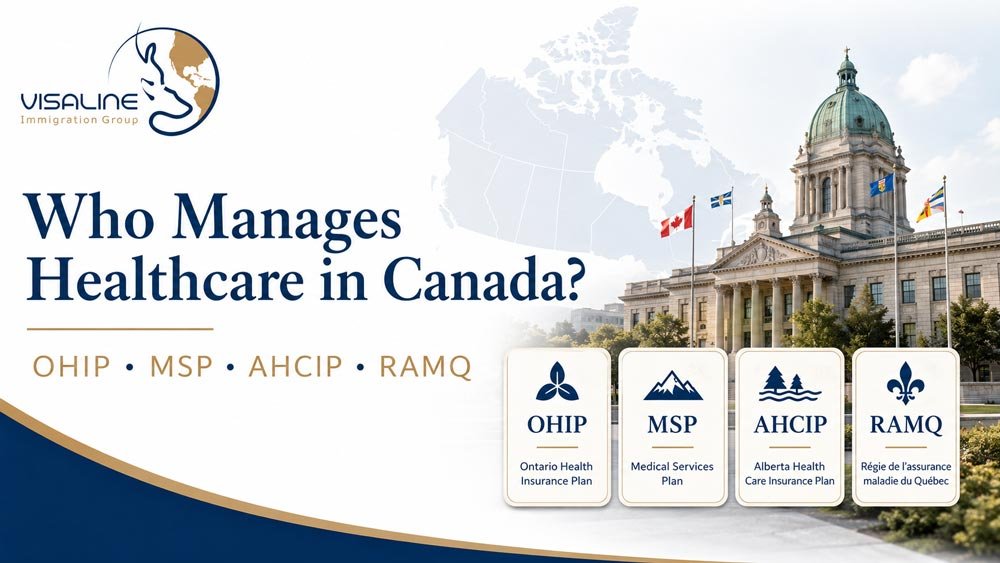
Each province and territory manages its own health insurance system and issues health cards to eligible residents.
Health Canada states that the provincial and territorial governments administer their respective health insurance plans, while the federal government contributes funding and establishes national principles through mechanisms including the Canada Health Act.
Examples of provincial plans include:
- Ontario Health Insurance Plan — OHIP
- Medical Services Plan — MSP in British Columbia
- Alberta Health Care Insurance Plan — AHCIP
- Régie de l’assurance maladie du Québec — RAMQ
Eligibility should always be checked with the province where the newcomer actually resides.
How to get a health card
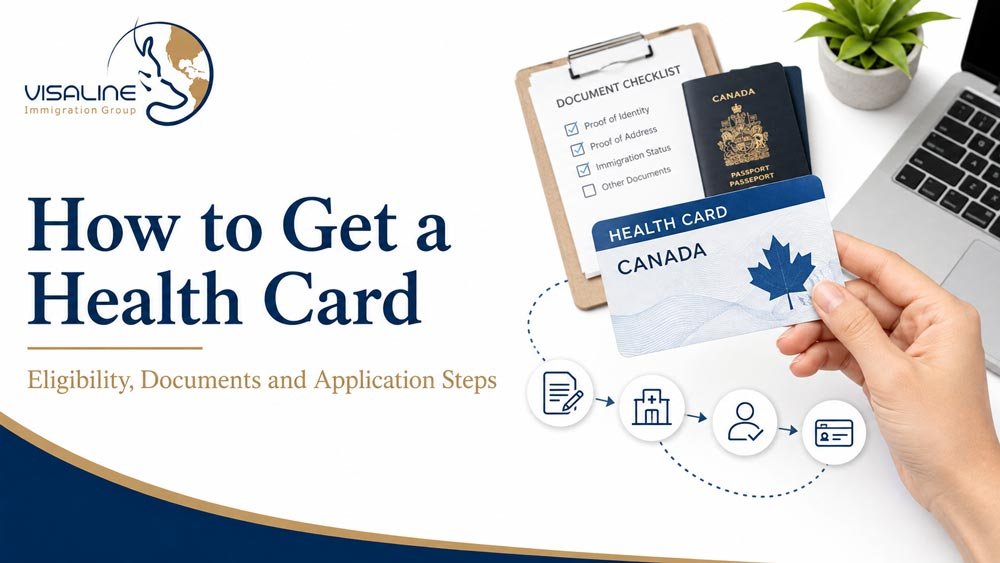
A health card is proof that a person is registered in the health insurance plan of their province or territory.
The general process is:
- Determine whether you meet the province’s eligibility requirements.
- Prepare the required identity, immigration-status and residency documents.
- Apply through the provincial or territorial authority.
- Complete any identity-verification requirements.
- Receive and keep your health card available for insured medical care.
The exact application process differs between jurisdictions.
IRCC also advises newcomers to prepare for a possible waiting period. Its newcomer healthcare guidance states that some provinces may have a waiting period of up to three months before public health insurance begins and recommends appropriate private coverage during an applicable waiting period.
Because provincial rules can change, current provincial guidance should be checked before arrival.
What public healthcare covers
The core principle of Canadian public health insurance is coverage for medically necessary insured services.
Under the Canada Health Act framework, these generally include:
- medically necessary hospital services;
- medically necessary physician services; and
- certain surgical-dental procedures that must be performed in a hospital.
The province or territory determines which particular services qualify as medically necessary within its plan.
Practical example
Suppose a covered resident develops severe abdominal pain and needs hospital treatment.
Medically necessary hospital and physician care would generally fall within the publicly insured system.
The medication prescribed after discharge, however, may be treated differently depending on the person’s province, age, employment benefits and eligibility for a drug program.
That distinction is one of the most important things newcomers should understand.
What may not be fully covered
Public healthcare does not mean every health-related expense is paid by the government.
IRCC notes that medications obtained from a pharmacy are not universally free and that public health insurance often does not cover prescription medication outside hospital settings.
Similarly, most routine dental services are not covered through standard provincial public health insurance.
Depending on the province and individual eligibility, additional expenses may include:
- prescription medications
- routine dental treatment
- vision care
- physiotherapy
- certain ambulance services
- private or semi-private hospital accommodation
- some mental health services
- medical devices
- services considered non-medically necessary
Some costs may be covered by:
- employer benefit plans;
- private health insurance;
- provincial drug programs;
- age-based programs;
- income-tested programs; or
- other government benefits.
Health Canada confirms that provinces and territories may provide additional benefits to specific groups such as children, seniors and people receiving social assistance.

Healthcare for temporary residents
Healthcare eligibility for temporary residents should never be assumed.
Permanent residents and Canadian citizens can apply for public health insurance, while eligibility for work permit holders, international students and other temporary residents depends on the rules of the province or territory.
Important groups to assess separately include:
- work permit holders
- international students
- spouses and dependent children
- visitors
- refugee claimants
- protected persons
International students, for example, may have different arrangements depending on the province and educational institution.
Refugees, protected persons and refugee claimants may in certain circumstances receive temporary coverage through the Interim Federal Health Program (IFHP) until another form of coverage becomes available. Current federal guidance describes IFHP coverage as limited and temporary and dependent on the person’s immigration status.
A professional immigration consultation can clarify immigration status, but provincial healthcare eligibility should still be confirmed with the responsible health authority.
Family doctors, walk-in clinics and hospitals
The Canadian healthcare system includes several points of access.
Family doctor
A family physician generally provides ongoing primary care and may refer patients to specialists where required.
IRCC notes that family physicians treat common health concerns, provide preventive care and refer patients to specialists when necessary.
Walk-in clinic
Walk-in clinics can be useful for non-emergency medical problems when a family doctor is unavailable.
Availability and billing practices can depend on provincial coverage and residency.
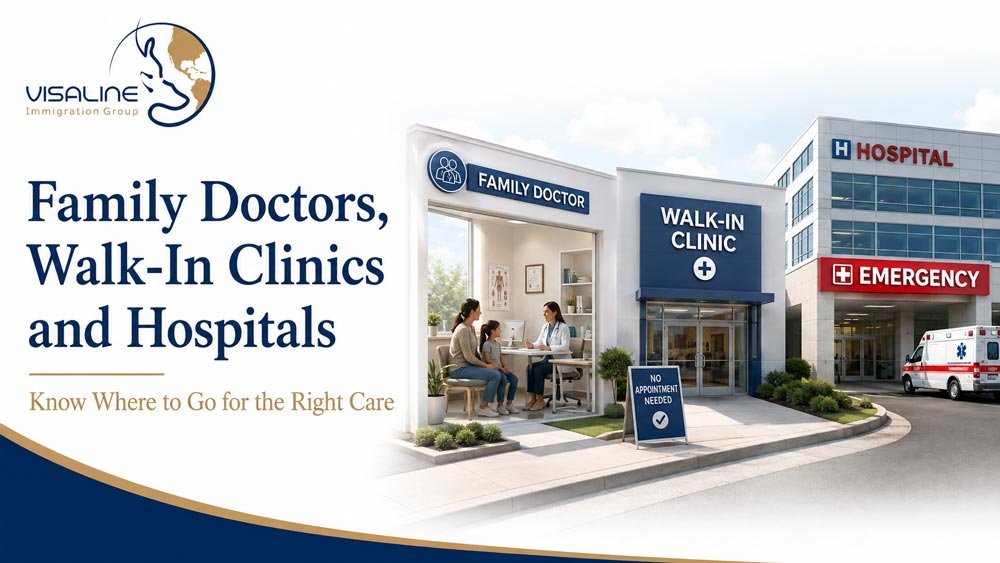
Emergency department
Hospital emergency departments are intended for urgent or potentially serious medical conditions.
IRCC advises people facing an emergency to go to the nearest hospital.
A simplified comparison:
| Service | Best suited for |
| Family doctor | Ongoing and preventive care |
| Walk-in clinic | Non-emergency short-term medical issues |
| Emergency department | Serious or urgent medical conditions |
| Pharmacy | Prescriptions, medications and certain minor-condition advice |
Private health insurance
Private insurance can still play an important role in Canada.
It may help cover expenses that fall outside the provincial plan, including:
- prescription medication
- dental care
- vision care
- physiotherapy
- travel-related healthcare
- certain medical devices
It may also be relevant during a period when a newcomer is not yet eligible for provincial insurance.
Employer-sponsored benefits are common, but they vary significantly by employer and policy.

Frequently asked questions
Is healthcare free in Canada?
Canada’s public health system covers many medically necessary hospital and physician services for eligible insured residents, but not every healthcare expense is free. Prescription medication, dental care, vision care and other services may require separate public or private coverage.
Do permanent residents get healthcare in Canada?
Permanent residents can apply for public health insurance in the province or territory where they live. The application process and timing are provincial or territorial matters.
Can work permit holders get public healthcare?
Some work permit holders may qualify, but eligibility depends on provincial or territorial rules and the person’s circumstances. Applicants should check directly with the province where they will reside.
Are international students covered by Canadian healthcare?
Coverage varies by province and institution. Some students may qualify for provincial coverage, while others rely on university, college or private insurance arrangements. The rules should be confirmed before arrival.
Are prescription medications free in Canada?
Not universally. IRCC states that pharmacy medication is generally not automatically free under public insurance, although eligible individuals may have provincial, employer or private drug coverage.
Is dental treatment covered in Canada?
Most routine dental services are not covered by standard provincial public health insurance, although separate public programs, employment benefits or private insurance may provide coverage depending on eligibility.
Conclusion
Canada’s healthcare system provides broad public coverage, but newcomers should not interpret “universal healthcare” to mean that every medical expense is covered immediately after arrival.
The critical questions are:
- whether you qualify for your provincial plan;
- when coverage begins;
- which services your plan covers; and
- whether private or supplemental insurance is necessary.
For temporary residents in particular, healthcare eligibility and immigration status should be reviewed separately because one does not automatically determine the other.
Legal information notice
This article provides general information about the Canadian healthcare system and immigration-related settlement considerations. Provincial healthcare eligibility and coverage can change and must be confirmed with the appropriate provincial or territorial authority. This information does not replace medical, insurance or legal advice.

Sources
- Health Canada — About Canada’s Health Care System.
- Health Canada — About the Canada Health Act.
- Health Canada — How Publicly Funded Healthcare Coverage Works.
- Health Canada — Health Insurance Cards.
- IRCC — Access Canada’s Universal Healthcare System.
- IRCC — Interim Federal Health Program.
Published/updated: August 10, 2026 Author: Afifeh Hosseini, Visaline Team Member and Content Creator
Contact us today to review your case and book your immigration consultation. We also recommend following Visaline Immigration Institute on Instagram for real-time updates on IRCC news and immigration law changes.
☎️ Toronto WhatsApp: +1-647-860-0005
