Education System in Canada for Children: A Guide for Newcomer Families
Parents moving to Canada often want to know whether their child’s previous grade will transfer directly, whether public school is available and whether the child needs strong English or French before starting. Canada has a strong public elementary and secondary education system, but there is no single national school system: education is primarily organized by each province and territory.
This provincial structure means grade organization, school calendars, language options and enrollment procedures can differ depending on where the family lives.
For Visaline, “With you on your immigration journey, from dream to reality” includes helping families understand practical settlement questions that begin after an immigration pathway has been chosen.
Table of contents
- How the Canadian school system works
- Canadian school grades and ages
- Public, private, English and French schools
- How newcomer children enroll
- Language support for newcomer students
- Children of temporary residents
- Choosing housing with schools in mind
- Frequently asked questions
How the Canadian school system works
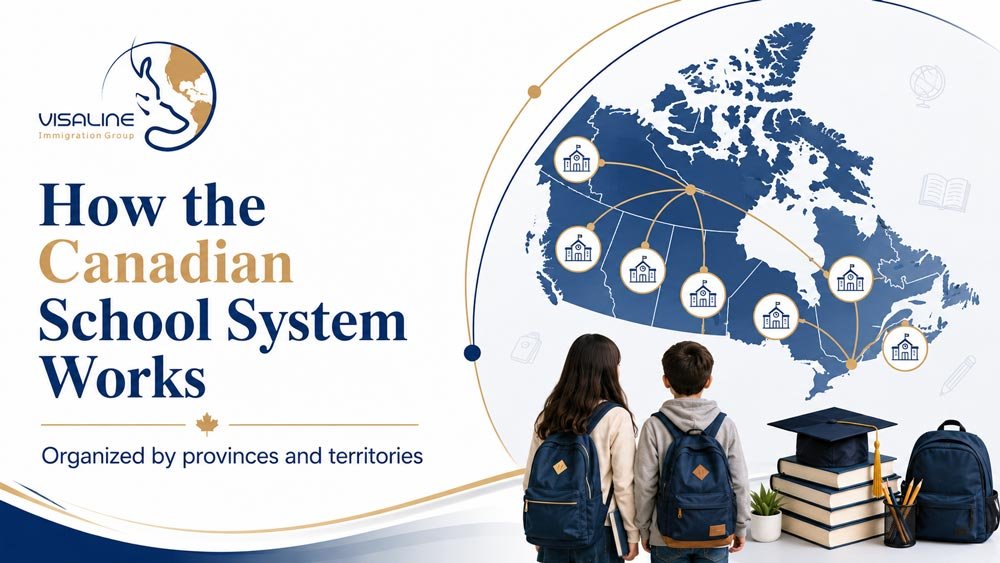
Canada’s 10 provinces and 3 territories are responsible for organizing, delivering and assessing elementary and secondary education within their jurisdictions. There is therefore no single federal Ministry of Education that determines one curriculum for the entire country.
In general, Canadian schooling includes:
- kindergarten
- elementary or primary school
- middle or junior high school in some jurisdictions
- secondary or high school
Exact grade structures differ by province.
Canadian school grades and ages
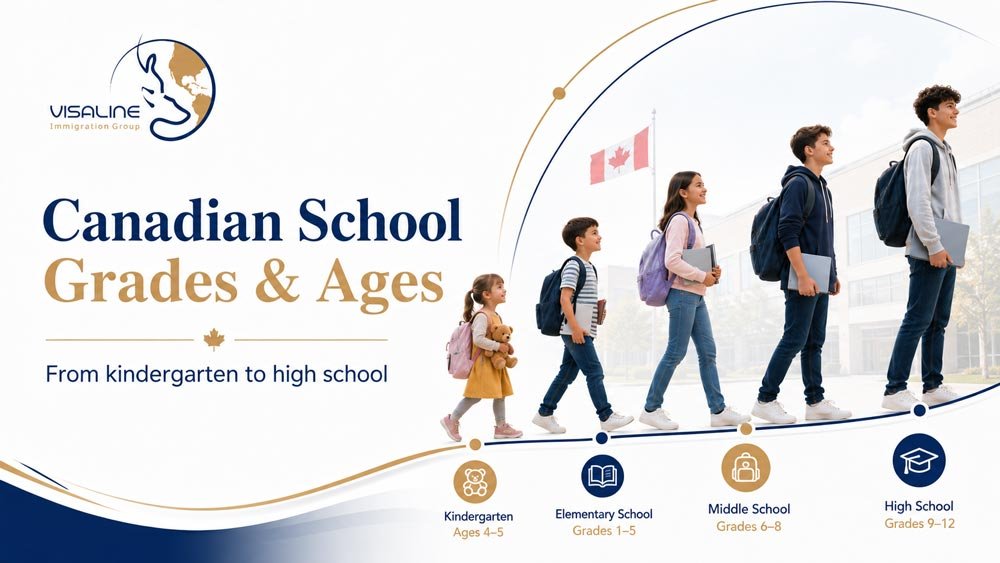
IRCC explains that, depending on the province or territory, children can begin primary education as young as age four and typically complete secondary education around age 18. Canadian schools commonly operate from late August or September until approximately June.
A simplified structure may look like this:
| Stage | Typical description |
| Kindergarten | Early formal school years |
| Elementary school | Early and middle grades |
| Middle/junior high | Exists in some school systems |
| Secondary/high school | Later grades leading to graduation |
This table should not be used to assign a child’s grade before arrival.
When a student enrolls in Canada for the first time, the school or school board may assess the child’s educational level and determine the appropriate placement.
Practical example
A 12-year-old arriving from another country should not automatically be assumed to enter the same numbered grade they left.
The school board may review:
- age;
- previous schooling;
- available academic records;
- language needs; and
- the local provincial system.
Parents should therefore contact the school board rather than relying exclusively on an online age-to-grade chart.
Public, private, English and French schools
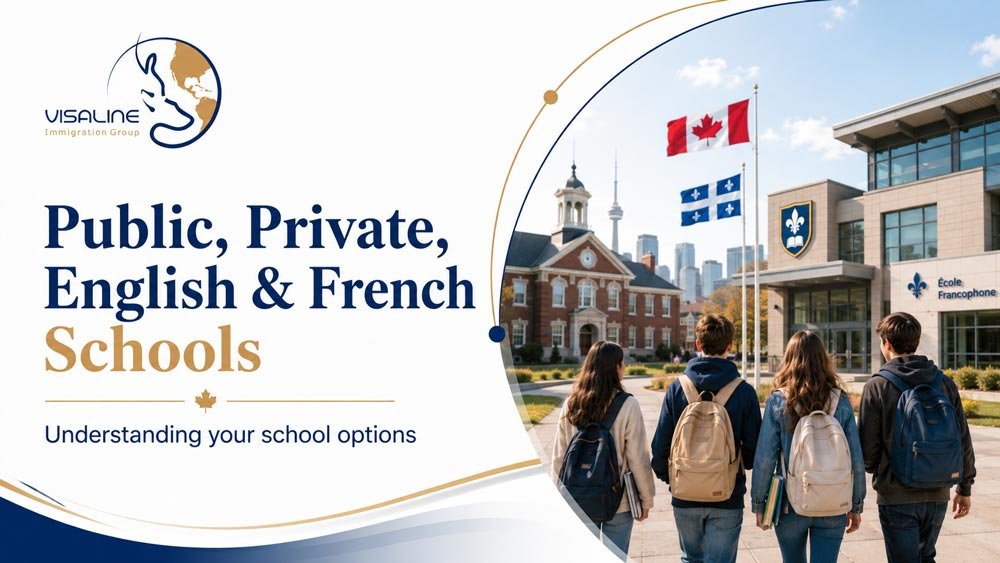
Depending on the province and location, families may encounter several education options, including:
- public schools
- private schools
- English-language schools
- French-language schools
- home education
IRCC identifies these among the possible schooling options available in Canada.
Public-school access and language-school eligibility can depend on provincial law, residency and the family’s circumstances, so families should confirm their rights with the relevant provincial ministry or local school board.
What is French immersion?
French immersion generally refers to programs in which students receive a significant amount of instruction in French, even when French is not their first language.
Availability and entry rules vary by school board.
For parents, the practical question is not simply whether French immersion exists but:
Does the local school board offer the program, and can the child access it at their grade level?
How newcomer children enroll
IRCC’s current newcomer enrollment guidance identifies several documents that families may be asked to provide for elementary or secondary school enrollment:
- birth certificate
- proof of guardianship or custody
- proof of residency
- immunization records
Parents should contact the local school board to begin enrollment.
A practical process is:
- Identify the local school board for your residential address.
- Contact the board or designated registration centre.
- Prepare identification and residency documents.
- Provide previous academic records where available.
- Complete any required educational or language assessment.
- Confirm the child’s assigned school and grade.
Enrollment rules can vary, particularly where proof of local residence affects school assignment.
Language support for newcomer students
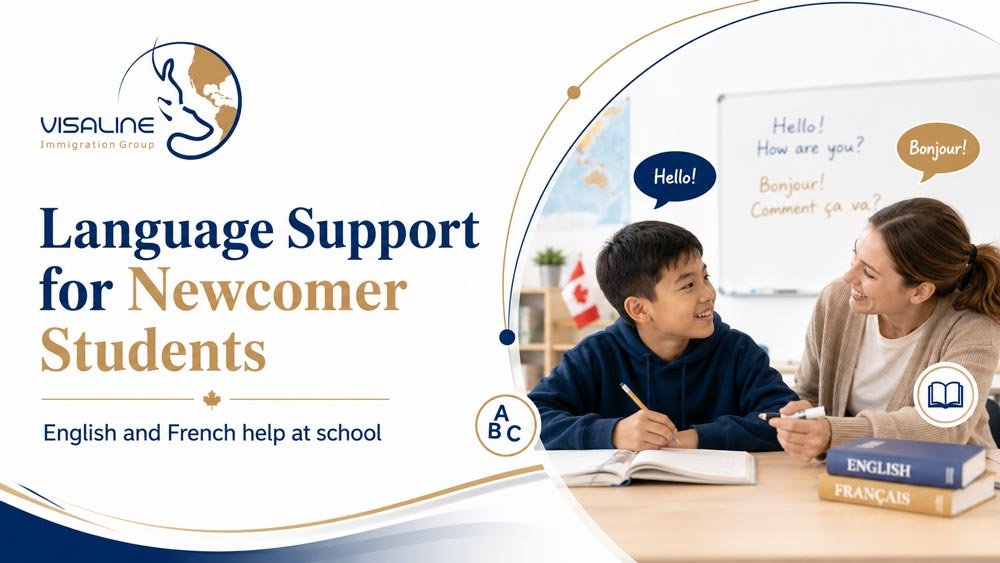
A child does not necessarily need fluent English or French before entering school.
IRCC notes that when a newcomer child enrolls for the first time, the school or school board can assess whether the student requires free language support such as English or French language classes. Settlement workers are also available in many schools to help students adjust.
This is particularly important for parents who fear that limited English will automatically prevent their child from attending school.
Language development, academic placement and newcomer adjustment are separate issues and may be addressed together by the school.
Children of temporary residents
School access can become more complex where a child or parent holds temporary immigration status.
IRCC confirms that Canadian primary and secondary schools can enroll international students and that special immigration rules apply to minor children studying in Canada.
However, parents should not assume that every child of a study permit holder, work permit holder or visitor has identical immigration documentation or tuition treatment.
The correct analysis may depend on:
- the child’s age;
- the child’s own status;
- the parent’s status;
- the province;
- the school board; and
- whether a study permit is required.
Because minor-child study rules are immigration matters and can change, families should verify their circumstances against current IRCC requirements before relying on generalized advice.
Choosing housing with schools in mind
Housing and education should be planned together.
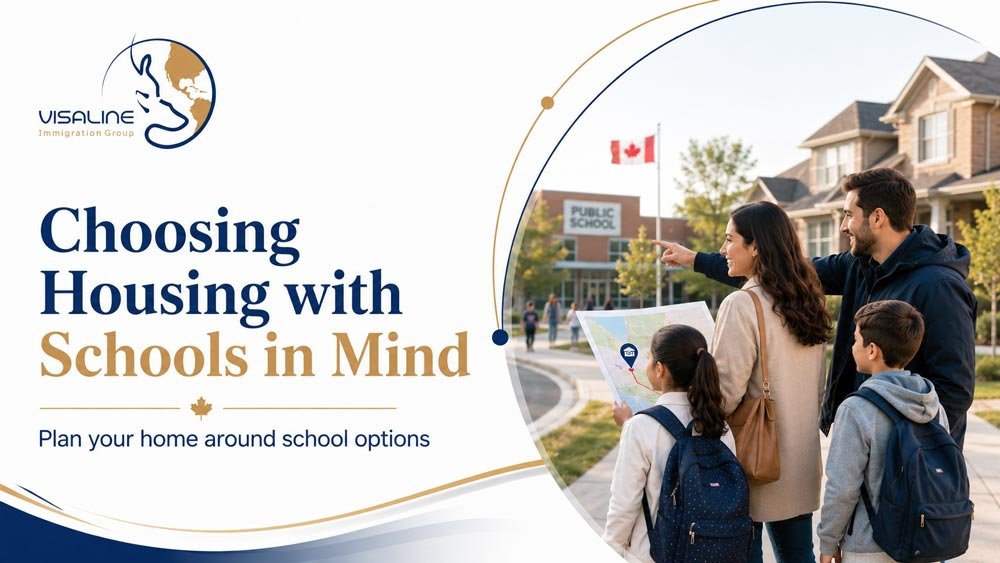
School boards generally operate within geographic areas and often manage student enrollment for schools located within those regions.
Before signing a long-term lease, parents should consider:
| Question | Why it matters |
| Which school board serves this address? | Determines local enrollment authority |
| Which school may the child attend? | Address can affect assignment |
| Is school transportation available? | Commute may affect family routine |
| Are language programs offered? | Not every school offers the same programs |
| Is childcare needed? | School hours may differ from working hours |
| Is the area affordable long-term? | Moving later may disrupt schooling |
A lower-cost apartment may be less attractive if it creates a difficult school or work commute.
Frequently asked questions
Is public school free in Canada?
Public elementary and secondary education is generally publicly funded for eligible residents, but access for temporary residents and international students can depend on immigration status and provincial or school-board rules. Families should confirm their specific circumstances before assuming tuition will not apply.
What age do children start school in Canada?
The starting age varies by province or territory. IRCC notes that children may begin primary school as young as age four and generally complete secondary education around age 18.
What grade will my child enter after moving to Canada?
The local school or school board can assess the child’s educational level and decide the appropriate placement. Age alone should not be used as the only indicator.
What documents are needed to register a child in school?
IRCC lists documents such as a birth certificate, proof of guardianship or custody, proof of residency and immunization records. Individual school boards may have additional requirements.
Does my child need to speak English before starting school?
Not necessarily. Schools may assess language needs and provide English or French language support to newcomer students.
Can children of international students attend school in Canada?
Children may be able to study in Canadian elementary or secondary schools, but their immigration-document requirements depend on their circumstances. IRCC specifically notes that special rules apply to minor children studying in Canada.
Conclusion
The Canadian school system offers newcomer families several educational options, but the details are determined locally.
The most important practical step is to identify the province, school board and expected residential address before making assumptions about grade placement, language programs or enrollment.
Families with temporary immigration status should also distinguish school-board admission rules from federal study-permit requirements and verify both where necessary.
Legal information notice
This page provides general information about elementary and secondary education and related immigration considerations. School enrollment, tuition and immigration-document requirements vary by province, school board and individual immigration status and should be confirmed with the responsible authorities.

Sources
- Council of Ministers of Education, Canada — Education in Canada: An Overview.
- IRCC — Elementary and Secondary School in Canada.
- IRCC — How to Enrol or Apply to School.
- IRCC — Preparing to Study as an International Student.
Published/updated: August 10, 2026 Author: Afifeh Hosseini, Visaline Team Member and Content Creator
Contact us today to review your case and book your immigration consultation. We also recommend following Visaline Immigration Institute on Instagram for real-time updates on IRCC news and immigration law changes.
☎️ Toronto WhatsApp: +1-647-860-0005
